

What Kind Of Animals Do Common Death Adders Eat
Common Death Adder
Acanthophis antarcticus
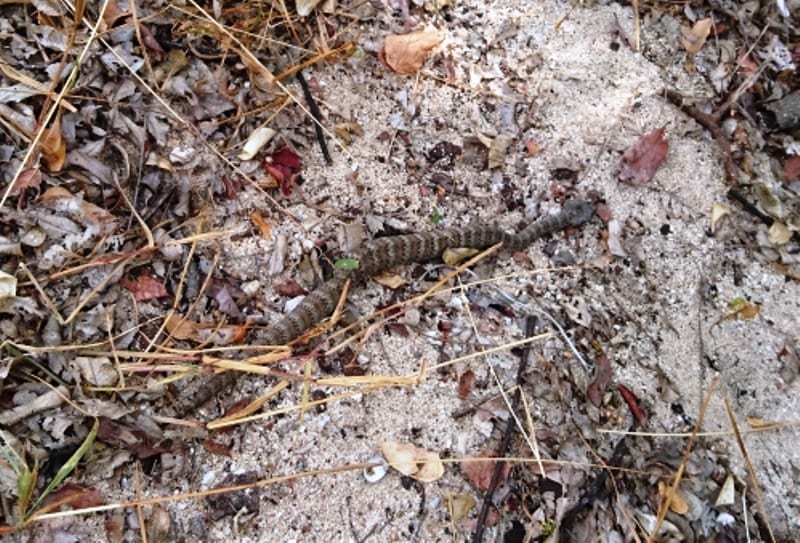
Where take all the Adders gone (long time passing?)
Can anyone produce a picture of a mainland Whitsunday Expiry Adder? Has anyone seen one lately?
Death Adders appear to still exist quite common on the Whitsunday Islands but in that location is much anecdotal evidence that they were also once quite common and seen regularly by landholders on the mainland. The Atlas of Living Australia has several records from the Whitsunday Islands but none from the mainland. The most recent record is from Saddleback Island in 2007. In other parts of its range it is becoming less and less mutual merely persists in quite high numbers on offshore islands eastward.g. the islands effectually Eyre Peninsula in South Australia. I accept heard that the great serpent man from this region, Ram Chandra, would come up from Mackay to "Cannonvale Pocket" to collect Decease Adders as it was a reliable spot to do then. Others call up seeing an adder in the past on their property or dead on the road simply not in contempo times.
There are 7 species of Expiry Adder in Commonwealth of australia. The species in our region is the Common Death Adder which has a southern and eastern distribution, reaching almost upwards to the southern Greatcoat. Information technology is a deadly venomous snake with a reputation for biting whatsoever hapless walker who may step on a snake that is lying curtained on a bush track or on a beach dune path. Perhaps, not as likely these days equally once it was simply I would still wear good footwear when out bushwalking.
Death Adders are sedentary animals by 24-hour interval and are difficult to observe unless seen on the move at dark. They use a sit and wait or ambush form of hunting, hiding below foliage litter with their tail placed in front end of the face. When a bird or lizard approaches the motion stimulates the adder to wriggle the worm similar spine on the stop of its brusk tail to attract the prey. Striking and holding the prey until it succumbs to the venom, then swallowing information technology whole.
In Queensland the Mutual Death Adder is listed equally Vulnerable and is especially sensitive to habitat change and land clearing for agriculture and this has no dubiousness had an impact on the species in this region. They need areas to secrete themselves away from other predators. Rocks, fallen logs and deep foliage litter equally well equally thick ground cover comprise their preferred habitat. Fortunately, at that place is however much of this blazon of habitat in the hills effectually the Whitsundays. The introduction of weeds into the bushland may also have had an impact, particularly the increment in Republic of guinea Grass along with a change in burn regimes. Also their sit and wait approach to feeding makes them susceptible to poisoning by Cane Toads every bit the striking-at-move instinct that they possess is a difficult one to control and toads would no doubt be attracted to the adders wriggling lure.
Dissimilar the non-venomous Keelback that tin consume toads most of our snakes have had to learn to avert eating toads and this could be a reason why another species, the King Brown Snake, is as well uncommon here now. The Scarlet-bellied Black Ophidian, a close relative of the King Brown, remains relatively mutual here and in other areas further northward where toads are present. There is scientific evidence that the head size of these tropical Reddish-bellied Blacks has reduced since toads appeared and it is idea the smaller caput to trunk size reduces the size of the toads that can be eaten and therefore gives the ophidian a greater take chances of recovering from the poisonous repast. This may be important as the Death Adder has a very large head compared to its body size and would therefore be more susceptible.
So, in addition to being shunned by people (as all snakes unremarkably are), adders accept much more to contend with and perhaps their slow decline in our region has gone unnoticed much in the style of the Whitsunday Koalas. Or maybe they are still around keeping well out of our style. Just if y'all do happen to come beyond an adder, even a dead one on the road, consider taking a picture (from a safe altitude of course) and we would happily include it on the regional Wildlife Gallery.
In the mean time we can note the post-obit from the Qld Dept Environment & Heritage Protection website:
Conservation status: This species is listed every bit Vulnerable in Queensland (Nature Conservation Human action 1992). Information technology is ranked as a medium priority under the Department of Environs and Heritage Protection.
Recovery actions
- Encourage sustainable grazing regimes that will maintain areas of habitat for mutual death adder.
- Encourage micro-mosaic patch called-for for burn regimes, which will allow common death adders to observe refuge from fires in unburnt patches.
- Prevent the destruction and deposition of important habitat, through: identifying guidelines to protect habitat; advisable zoning; identifying development alternatives and incentives to retain habitat; and, educating communities.
- Encourage the retentiveness of fallen logs, foliage litter and rocks, to provide refuges for common death adder.
- Adopt a collaborative approach to reptile conservation and encourage involvement from government agencies, regional Natural Resource Direction (NRM) bodies, manufacture groups, indigenous groups, landholders and the community.
What tin you practice to assistance this species?
- In areas of known and potential habitat, implement appropriate grazing regimes to convalesce grazing pressure.
- Avert removing fallen logs, leaf litter and rocks in mutual death adder habitat as this disturbs and diminishes refuge sites.
- Become involved in community-based projects (e.1000. fencing remnants to reduce grazing impacts, weed and feral predator control, reptile monitoring) and help protect habitat across a suite of land tenures, specially on not-reserved lands.
- Help protect threatened reptiles by supporting integrated pest management activities which seek to address feral beast threats (e.g. pigs, cats and foxes).
Source: https://cqclandcarenetwork.org.au/wildlife/common-death-adder/
Posted by: gutierrezforood.blogspot.com
0 Response to "What Kind Of Animals Do Common Death Adders Eat"
Post a Comment